Pro Tip: Long-Term Planning Made Simple
One of the biggest stumbling blocks for many coaches is coming up with a big picture plan. But writing a greatest program isn't just about today. Instead, today’s workout plan should be but a small, yet strategic and deliberate puzzle piece that fits into the big picture plan.
One of the biggest stumbling blocks for many coaches is coming up with a big picture plan.
But writing a greatest program isn't just about today. Instead, today’s workout plan should be but a small, yet strategic and deliberate puzzle piece that fits into the big picture plan.
Program Design Pro Tip: Periodization
This is where the Planning & Periodization feature on the CoachRx app comes in: It takes out the overwhelm and makes programming an entire year easy.
Regardless of whether your client is a competitive athlete or a general population client just looking to be fit and healthy for life, periodization—or breaking the year into chunks, and considering volume and intensity in each phase of training—is important.
This ensures you’re creating a program that builds on itself day-to-day, week-to-week, month-to-month so that your clients are consistently progressing toward their long-term goals (rather than just giving them a random “badass workout” each day).
Implementing Planning & Periodization
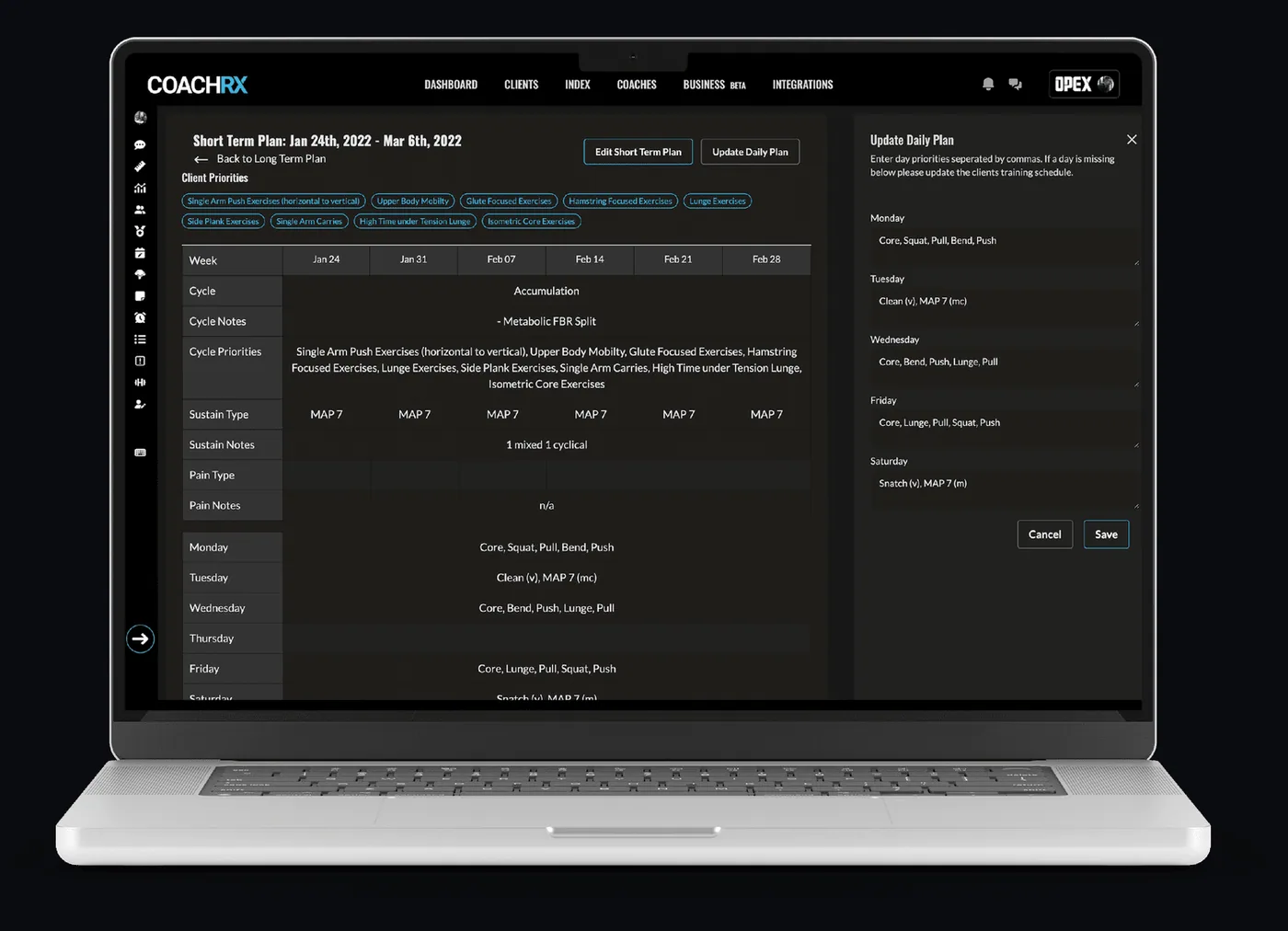
Creating short-term, long-term and daily plans couldn’t be easier using the Planning & Periodization tool, located on the sidebar of your client’s calendar.
-
Add a long-term plan, aka a macrocycle. We recommend building these based on the calendar year for general population clients, and competition seasons for athletes.
-
Add short-term plans, aka mesocycles. You can build out short term plans for the entire macrocycle, or to keep things simple just start with one for now. Phases to choose from include:
- Accumulation: building volume, skills and technical ability (general population and beginner clients will likely spend the large majority of the time here)
- Intensification: decreasing volume and increasing intensity
- Pre-Competition (for competitive athletes only): Simulating a competition
- Competition: The actual competition
- Deload: Time devoted to recovery
-
Then, add the daily plan, aka a training split, to each short-term plan. You can read more about daily plans in this program design pro tip.
Never implemented periodization in your program design system before? Start with one client, set a long-term plan for the remainder of this calendar year, and begin plugging in short-term plans inside. With a bit of practice the planning process only takes a few minutes, but will pay dividends on your time, focus, and your clients’ results in the future.
Start your free trial of CoachRx and upgrade your programming flow with this tip today!

More in Program Design.
Deliver the coaching
you're capable of.
Try CoachRx free and see what changes when every part of your practice is in the same place.