

Program Notes That Help Clients Train With Intent

A well-built workout can still miss the mark if the client doesn't understand how to perform it. Program notes turn sets, reps, and tempos into clear coaching direction, especially when you aren't standing beside the client.
For online coaches, thoughtful notes also build trust. They show clients that their training plan connects to their goals, prior sessions, and the conversations you've had together.
Program Notes Are the Bridge Between Design and Execution
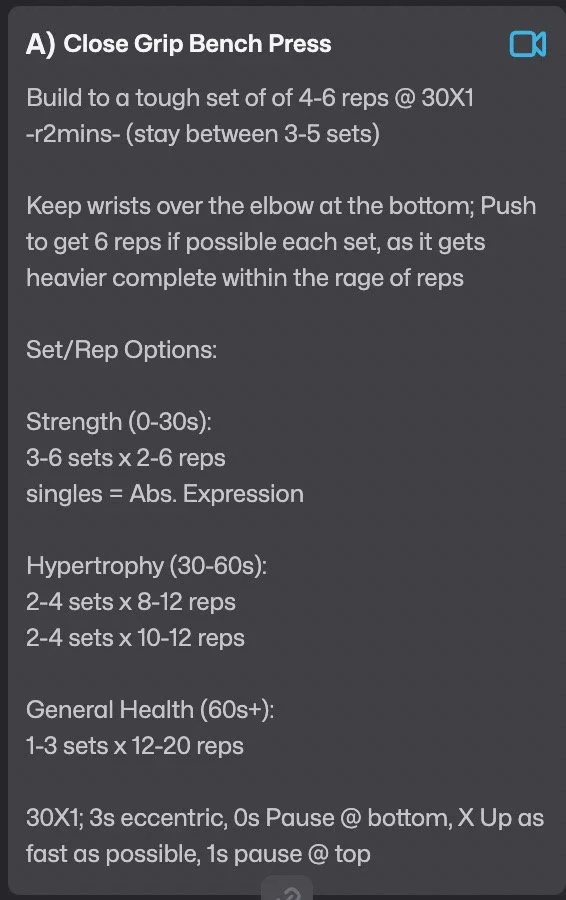
Exercise selection, reps, sets, and tempo all matter. However, clients need context to carry out the session the way you intended. A close-grip bench press written as four to six reps can mean very different things to someone who is new to lifting versus an experienced athlete.
A short note can clarify the goal: build to a tough set, keep the wrists stacked over the elbows at the bottom, and push for six reps until the load requires four or five. Now the client knows the expected effort, the technical priority, and how to respond as the weight gets heavier.
This matters even more in remote coaching. You can review results, videos, and client feedback, but the notes are the final touchpoint before training begins. Tools such as the CoachRx give coaches one place to organize the plan, session feedback, and ongoing communication.
A program only works as designed when the client understands what to do, why it matters, and what the work should feel like.
Generic Feedback Creates Distance
Clients often come to a new coach after receiving vague feedback such as "good job" or "fix your form." Those comments may be well-intended, yet they don't tell the client what went well, what needs attention, or how to apply the feedback in the next session.
Generic notes also make coaching feel automated. A client should recognize that the coach read their results and understands their training history. That doesn't require writing a paragraph under every exercise. It requires choosing the one or two details that matter for that person.
Avoid habits that reduce clarity:
Writing comments that could apply to any client or any session.
Adding so much text that the important cue gets buried.
Repeating basic technical instructions to an experienced lifter who already owns that skill.
Giving developmental feedback by text when a video or call would communicate it better.
Your notes should sound like you. Daniel Persson and Brandon Gallagher describe this as a coaching signature, the language, tone, and style clients come to associate with your coaching. One coach may write direct, concise notes. Another may use more detail and encouragement. Both approaches work when the message is clear and personal.
Use a Simple Structure for Each Exercise
A useful note often follows three parts. It gives the client direction without turning the program into a manual.
Desired outcome: State the intended effort or result. For example, "Build to a tough set of four to six reps."
Movement details: Highlight the cue that will matter most. On a close-grip bench press, that may be keeping the wrists over the elbows at the bottom. On a paused snatch, it may be a direct reminder that the pause is the entire point of the drill.
Stimulus details: Explain how the client should approach the set. A coach might write, "Push for six reps as the load rises. Finish between four and six reps when the set gets heavy."
This format also helps distinguish a building set from straight sets. "Build to a tough set of four to six" tells the client to increase load over several attempts. In a later week, "Complete four sets of six at last week's top weight" gives a clear reference point and calls for the same load across work sets.
Use last week's weight as a reference, then adjust based on how the first working set moves.
Clear references reduce confusion, especially for clients who want exact percentages or prescribed weights. Percentages can help, yet they still require judgment. A client may feel different on set four than on set one. Notes give them room to make a sound decision without losing the goal of the session.
Match the Detail to the Client and Movement
A newer client may need a reminder to complete warm-up sets before working sets. An experienced powerlifter probably doesn't need a long explanation about bracing or foot pressure before every squat. In both cases, the coach should write only what helps the client execute better that day.
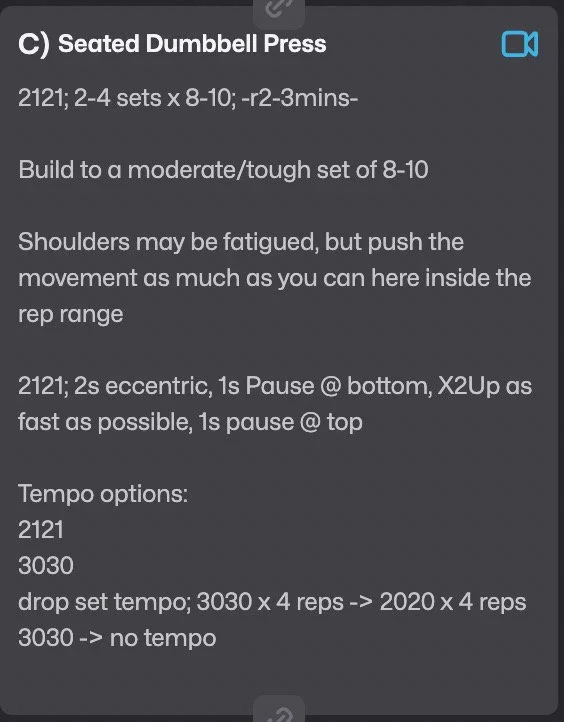
Notes can also prepare the client for fatigue. If a shoulder press comes after a close-grip bench press and a heavy row, say so. A note such as, "Your shoulders may feel fatigued here. Stay within the tempo and rep range, and push the best set you can," prevents the client from assuming they failed because the load is lower.
Movement-quality work calls for another kind of direction. During a side bend, range of motion may matter more than load. The client should reach the deepest controlled position they can, return to a neutral spine, and avoid chasing a heavier dumbbell at the expense of the movement.
A strong coach can also leave space for assessment. Sometimes a short prescription reveals how a client naturally approaches training. Do they build load patiently? Do they start too heavy and fade? Do they miss a pause when it isn't heavily emphasized? Those patterns guide the next week's notes and the next coaching conversation.
For a practical look at remote program structure, OPEX also shares a program design guide for online coaches.
Use Video and Calls When Text Loses Its Tone
Written feedback works well for quick encouragement, simple session adjustments, and reminders tied to a movement. Still, text can make a constructive message sound harsher than intended. A client can't hear your tone or see your expression.
When a technical change needs more explanation, send a video or voice message. A short Loom-style video lets you point out the movement, explain what you want changed, and keep the tone supportive. For a larger concern, schedule a call rather than creating a long thread of messages.
A helpful format for developmental feedback is simple: acknowledge something the client did well, explain the adjustment, then reinforce what they can do next. This keeps the focus on progress while still making the requested change clear.
Client videos also give you better material for those conversations. Encourage more than a "done" response or a logged weight. Training videos, written reflections, and notes about how the work felt help you spot trends that numbers alone may hide.
Connect Daily Notes to Bigger Goals
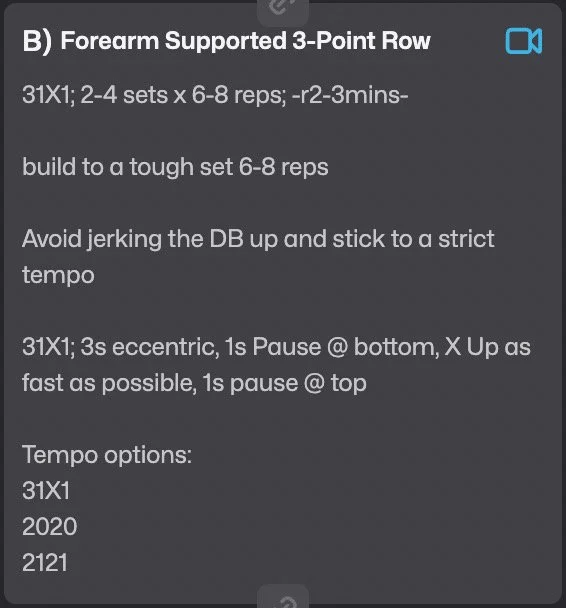
The strongest notes link an accessory movement to a goal the client cares about. If a client wants a ring muscle-up but lacks pulling strength, a rowing exercise can include a short reminder: "This is part of building the strength we discussed for your ring muscle-up."
That sentence changes the feel of the exercise. The row is no longer random accessory work. It belongs to a larger plan the client understands.
Reusable progressions are useful in individualized coaching. A coach may return to a successful pull-up, rowing, or air bike progression because it has worked before. The individual design comes through the exercise order, loading, priorities, and communication around it. The notes should reflect that client's current abilities, goals, and past conversations.
Coaches who want to build those skills can explore the OPEX Method Mentorship, which focuses on individual design and the coaching process behind it.
Write Notes Clients Can Use
The best program notes are clear enough to guide action and personal enough to show the client they are seen. They set expectations for effort, call out the technical detail that matters, and connect today's work to the bigger goal.
Communication is part of the program design. When clients know how to approach a session and why it belongs in their plan, they can train with more confidence and give you better feedback for the next step.
For the full pathway into this kind of program design, look at the OPEX Method Mentorship.
Connect with the coaches
Brandon Gallagher:Brandon’s Instagram (@bgperform_)
Daniel Persson:Daniel’s Instagram (@danielcapersson)
Join us live on Tuesdays mornings 11:30am EST on the OPEX YouTube Channel
Start your free 14-day CoachRx trial and bring principled programming, habit tracking, and high-touch communication all in one seamless coaching command center.
