


Bench Press Accessory Work That Fixes Common Faults
A stronger bench press rarely comes from benching more and hoping for the best. It usually comes from spotting where the lift breaks down, then picking accessory work that solves that exact problem. That was the big theme in this OPEX Fitness conversation with coaches Brandon Gallagher and Daniel Persson. They framed bench faults as useful feedback, not bad news, and showed how better exercise selection can turn a sticking point into a clear plan.

Content Minutes for Coaches: The Metric That Builds Trust and Clients
For years, I watched coaches chase follower count. Then the focus shifted to views. Both numbers can look exciting, but neither tells me what I actually need to know, which is whether the right person is moving closer to trusting me enough to buy.

Your CoachRx Podcast Network Update End Of March 2026
The CoachRx Podcast Network just delivered another powerful week of content, and this collection is packed with specialty programming, mindset mastery, and strategic business insights. From complete HYROX prep programming and handstand walking progressions to why specialization might be your best business move, here are 8 must-listen episodes.
Will AI Replace Fitness Coaches? The Real Answer
Fitness coaches keep asking me the same thing right now: will AI replace us? My answer is no, not if you're a great coach. But I also don't think we can ignore what's happening and hope our work stays the same.
How OPEX Coaches Build a Bench Press Program From 200 to 225 Pounds
A bigger bench usually looks simple from the outside. Add weight, train hard, repeat. In practice, it rarely works that cleanly. Bench press programming gets better when the goal is clear, the weak point is known, and every exercise has a job. In this live design breakdown, Brandon Gallagher and Daniel Persson walk through how they'd build a bench-focused program for an intermediate lifter trying to reach 225.

The Fitness Coaching Market Isn't Saturated, It's Mature
If you've been telling yourself the fitness coaching market is saturated, I want to challenge that. In this episode, I explain why the market isn't saturated, it's mature, and why that shift changes everything about how I think about marketing, positioning, trust, and long-term growth as a coach. I break down the difference between an emerging market and a mature one, why generic content gets ignored, and what actually helps fitness coaches stand out now. I also share why credibility matters more than visibility, why consistency becomes a real advantage, and how serious clients think in a mature market. If you're a fitness coach, online coach, or individual design coach trying to grow without chasing every trend, this episode will help you get clear on what to build next.
What OPEX Coaches Changed Their Minds About in Program Design
Good coaching isn't about defending old opinions forever. It's about noticing what actually works, what wastes time, and what helps clients make steady progress. In this conversation, OPEX coaches Brandon Gallagher and Daniel Persson unpack several ideas they once believed strongly, then explain why their thinking changed.
Your CoachRx Podcast Network Update Early March
The CoachRx Podcast Network just delivered another powerful week of content, and this collection is packed with specialty programming, mindset mastery, and strategic business insights. From complete HYROX prep programming and handstand walking progressions to why specialization might be your best business move, here are 8 must-listen episodes.
Why Waiting Is the Most Expensive Decision a Coach Can Make
If a client told me, "I'm not ready to start yet. I want to get in better shape first," I wouldn't let them sit in that loop. I'd tell them the same thing you'd tell them: there's no perfect moment, and the preparation is the training. So I need to ask the question that stings a little: Why are you waiting to build your marketing, content, and personal brand? In this post, I'm breaking down five reasons starting now matters more than being ready, and what's actually at stake if you keep delaying.
Why Specializing Makes You a Better Coach (And Gets You Better Clients)
If you feel like you're doing all the right things but your message still isn't landing, you're not alone. A lot of coaches are "lost in this whole like marketing world," and the default answer becomes, "I coach everyone." In a crowded market, that approach makes it harder to coach well, harder to explain what you do, and harder for the right clients to trust you.
Specialization fixes that, not as a marketing trick, but as a coaching decision that improves your reps, your results, and your clarity. Carl Hardwick and Kandace Dickson (host of the Marketing for Fitness Coaches podcast) break it down from both angles, coaching and marketing, with a few practical frameworks you can use right away.
Daniel Persson's 240 kg Deadlift Update on the Road to 250 kg (Behind the Design)
In this Behind the Design session, Daniel Persson and Brandon Gallagher share a real update from Daniel's push toward a 250 kg deadlift. The headline is clear: after about four months of focused work, Daniel pulled 240 kg for a heavy single, moving his goal from "someday" into "close enough to taste."
Why You Need to Start Creating Content Now (Before AI Floods the Feed)
Most coaches don't need more marketing ideas, they need the right order. In this episode, I share the 8-step marketing roadmap I teach inside the OPEX Method Mentorship so you can stop guessing, build a system that fits you, and create content that actually turns into clients. This is for fitness coaches who feel scattered, keep trying random tactics, and want a clear path from messaging, to content, to an offer that sells, to a client acquisition engine you can run for the long game.
Men Over 40 Don't Need Complexity, They Need Clarity in Training
Coaching men over 40 can get noisy fast. Labs, wearables, "optimal" everything, and a dozen opinions about what matters most. I'm not against any of that, but most guys in this season don't need more inputs. They need a clear plan they can repeat, recover from, and improve with.
Behind the Design: Real OPEX Program Design Examples From Daniel Persson
If you've ever looked at a workout and thought, "This seems simple, but it's going to hurt," you already understand part of what great program design does. The goal is intent, not novelty. In this Behind the Design session, I walked through several real examples Coach Daniel Persson has been sharing (and the coaching thinking behind them), from competition prep to coming back from injury.
The Marketing Roadmap Fitness Coaches Are Missing (8 Steps in Order)
Most coaches don't need more marketing ideas, they need the right order. In this episode, I share the 8-step marketing roadmap I teach inside the OPEX Method Mentorship so you can stop guessing, build a system that fits you, and create content that actually turns into clients. This is for fitness coaches who feel scattered, keep trying random tactics, and want a clear path from messaging, to content, to an offer that sells, to a client acquisition engine you can run for the long game.
Your CoachRx Podcast Network Update Late February 2026
The CoachRx Podcast Network just dropped another incredible week of content, and this collection tackles some of the most critical (and often misunderstood) aspects of coaching. From environmental impacts on performance and chronic pain rewiring to the niche mistake that's costing coaches clients, here are 8 must-listen episodes.
Remote vs. In-Person Coaching: What It Takes to Go Online (and How to Find Your Specialty)
A lot of coaches want remote coaching because it looks like freedom. You can work from anywhere, reach more people, and build a schedule that fits your life. The problem is that many coaches try to jump straight to online work before they've built the skills that make online coaching effective. In this episode of Behind the Design, OPEX coaches Daniel Persson and Brandon Gallagher talk through what actually changes when you coach remotely, what stays the same, and why specialization in coaching usually comes after you master the basics.
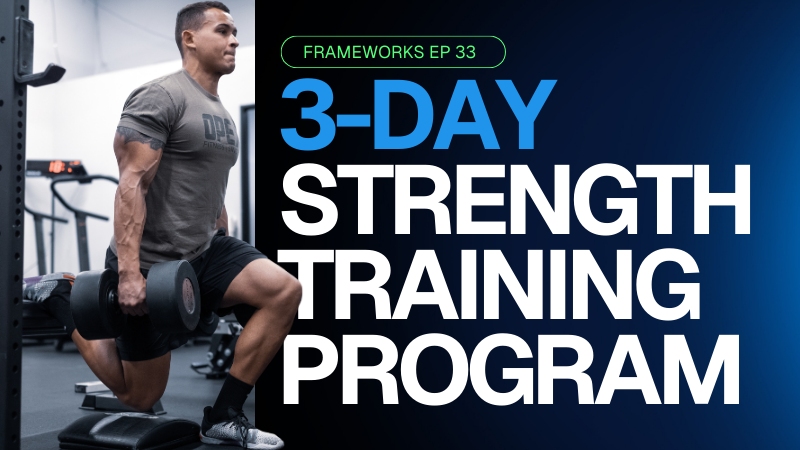
Designing a 3-Day Strength Training Program That Fits Real Life (Full-Body Split Framework)
If you coach (or train) long enough, you start to see the same problem over and over. People don't fail because they "need a better exercise." They fail because the plan doesn't fit their life, their schedule, their stress, or their body. That's why I keep coming back to a 3-day per week strength training program. I've used this split for myself for about 8 to 10 years.
The Niche Problem Every Fitness Coach Gets Wrong (And How to Fix It)
If your content feels like it should be working, but it keeps getting ignored, you might not have a "content problem." You might have a niche problem. Most fitness coaches get into coaching because they want to help everyone. I get it. You can see the potential in almost anyone, and you know your coaching could improve a lot of lives. Still, your coaching could help everyone, but everyone is not your ideal client.
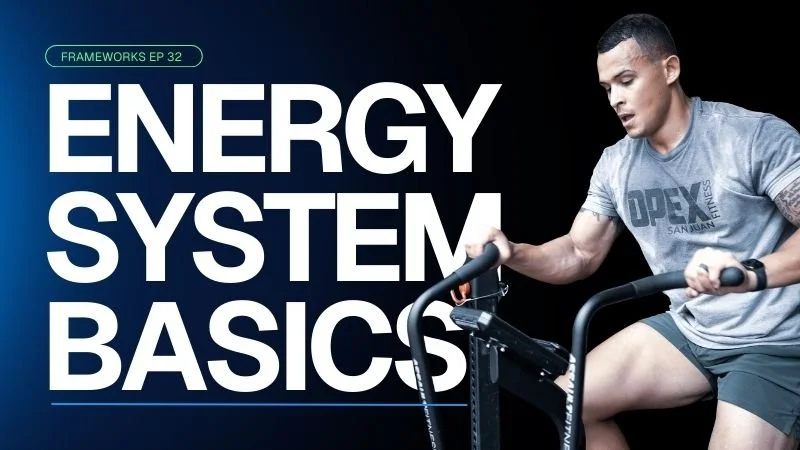
Aerobic vs. Anaerobic Training for Coaches (Simplified With ATP)
Energy systems training gets messy fast. One coach says "aerobic base," another says "intervals," and suddenly we're arguing about zones, charts, and what counts as conditioning. I keep it simpler by anchoring everything to ATP, the energy currency of the body. If I can keep ATP available for the task, I can coach with more intention and less guesswork. From there, I sort training into three buckets I use all the time: Gain, Sustain, and Pain.